Home › SCREEN TIME
SCREEN TIMEScreen Time Guilt Is Real: A Kinder Way to Think About the Tablet
Screen time guilt can follow parents everywhere. A kinder, more honest way to judge screen time by what it replaces, what follows it, and how it ends.

You hand over the tablet so you can cook dinner without a toddler hanging off your leg, and within minutes the screen time guilt arrives right on schedule. You scroll past a post about perfect wooden toys. You remember a headline you only half-read. You wonder if twenty minutes of cartoons while the pasta boils is somehow the decision that defines your parenting.
It is not. And the guilt itself deserves a closer look, because guilt that fires at every screen — a video call with grandparents, a maths game, a film on a sick day — is not giving you useful information. It is just making an ordinary tool feel like a moral failure.
Where the guilt actually comes from
Parents today are parenting in public, with a constant stream of other families’ best moments and a steady drip of alarming headlines. Few topics collect judgement like screens. The result is a strange double bind: screens are built into school, work, family life, and every waiting room, yet using them at home can feel like something to confess.
It helps to separate the feeling from the facts of your own house. Guilt is loudest on hard days — when you are ill, solo-parenting, working from home with a preschooler, or simply touched out. On those days the tablet is not a shortcut around parenting. It is how dinner, a shower, or a work call becomes possible. Context matters, and any honest look at screen time has to include the parent in the picture.
Better questions than ‘how many minutes?’
Minutes alone tell you surprisingly little. A kinder and more useful set of questions looks like this:
- What is on the screen? A story, a game your child plays with you nearby, and an endless autoplay feed are three very different experiences wearing the same rectangle.
- What is it replacing? A screen during a long car ride replaces boredom and back-seat bickering. A screen that replaces sleep, outdoor play, or every family meal is a different conversation.
- How does it end? If stopping is a brief grumble, your routine is probably fine. If every ending is a meltdown, the content, the timing, or the warning system needs adjusting — that is fixable information, not a verdict on you.
- How is my child the rest of the day? Sleep, appetite, play, mood, curiosity. A child who is thriving in the round is giving you better data than any guilt spiral.
Simple guardrails that quiet screen time guilt
You do not need a colour-coded chart. A few steady habits do most of the work. Keep screens out of the last hour before bed, when winding down matters more. Give a warning before the end — ‘two more minutes, then we stop’ — and keep it. Prefer one chosen programme over an infinite feed, because a natural ending is a gift to everyone. And when you can, sit nearby for the first minutes. Co-watching even briefly turns a solo activity into a shared one, and you will know exactly what your child is watching.
Pair screens with an easy off-ramp. A book basket, a puzzle, or colouring pages set out before the tablet appears makes the transition a move toward something, not just away. Children resist endings far less when the next thing is visible and appealing.
Easy swaps to keep nearby
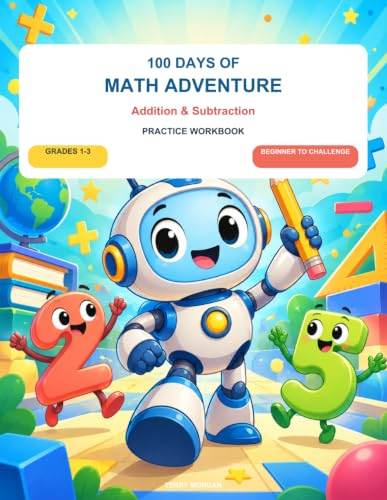
100 Days of Math Adventure, a workbook for Grades 1-3, gives school-age kids short, satisfying challenges that work brilliantly as a post-screen landing pad. For younger children, the Cozy Kawaii Axolotl Coloring Book offers sweet, simple pages that little hands can finish and proudly show you. And Tayden the Tapir’s Quiet-Time Club is a calming story to read together when you want the room to slow down after a busy, buzzy day.
None of these need to ‘earn back’ screen time. That framing keeps the guilt alive. Books and colouring are not penance; they are just other good things in a varied day. Children can love a cartoon and a colouring book in the same afternoon without either one cancelling the other out.
So here is a kinder rule to carry: judge the day as a whole, not the tablet in isolation. Was there sleep, food, movement, connection, and some play? Then twenty minutes of a show while you cooked is exactly what it looked like — a practical choice by a parent doing several jobs at once. Let the guilt retire. You have better things to spend that energy on, starting with eating your dinner while it is still warm.

Books from our shelf that fit this article
- 100 Days of Math Adventure — Addition & Subtraction Practice Workbook for Grades 1-3
- Tayden the Tapir's Quiet-Time Club — A Calming Story About Breathing, Listening, and Friendship
- Cozy Kawaii Axolotl Coloring Book — Relaxing Cute Creatures for Kids Ages 4+

Browse the whole Pooshop101 bookshelf
All 22 Pooshop101 books — stories, coloring books, puzzles and activity books for kids, grown-ups and grandparents.

Spooky Jobs Coloring Book
Bold and Easy Cute Halloween Animals with Jobs for Toddlers and Kids Ages 2-5
See it on Amazon


Junie Rae and the Quiet Gift
A Story About Listening, Faith, and the Gift Only You Can Give
See it on Amazon




Count Fang's Halloween Coloring Book
A Cute Animal Dracula Adventure for Kids Ages 4-8
See it on Amazon
The Christmas Memory Lane Activity Book for Seniors
Large-print holiday memories, puzzles and conversation starters
See it on Amazon
World Sleuth Academy: The Vanishing Atlas
60 Detective Logic Puzzles for Kids Ages 8-12
See it on Amazon

Cozy Season
A Bold and Easy Coloring Book for Adults, Teens & Kids — Fall, Halloween & Christmas
See it on Amazon



Not-So-Spooky Halloween Coloring Book
Friendly Halloween characters with simple designs for kids ages 3+
See it on Amazon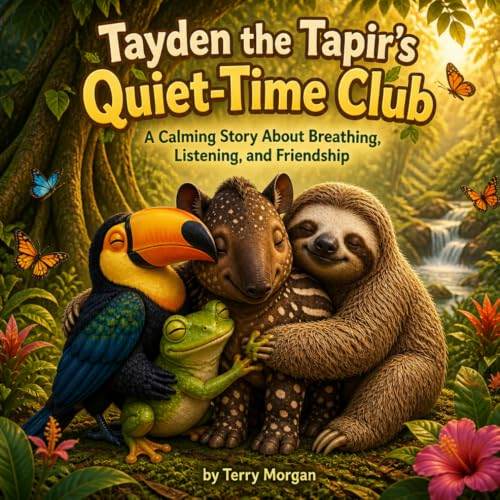
Tayden the Tapir's Quiet-Time Club
A Calming Story About Breathing, Listening, and Friendship
See it on Amazon
Capybara Halloween Coloring Book for Kids
Fun and creative capybara Halloween coloring pages
See it on Amazon
My First Christmas Dot Markers Activity Book
50 Big-Dot Holiday Pages for Toddlers Ages 2-4
See it on Amazon